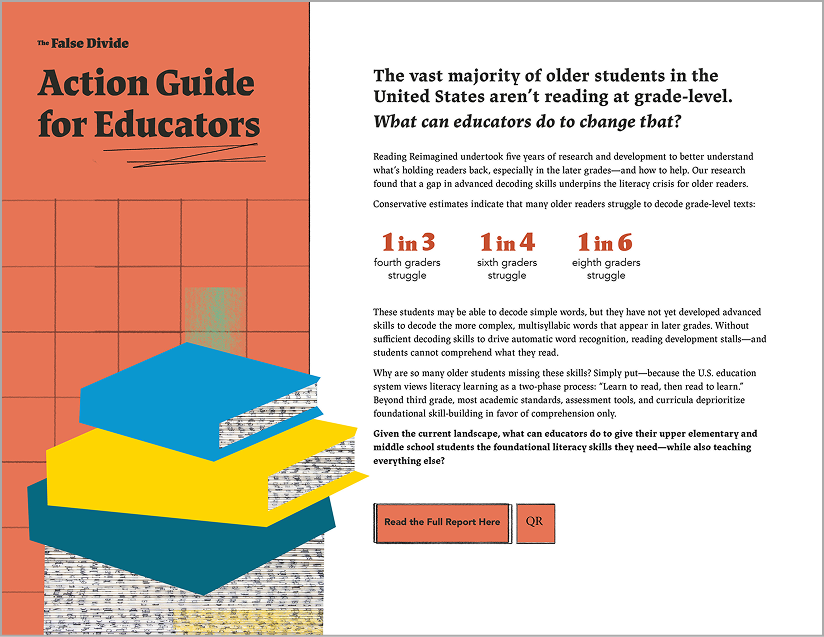
The False Divide
Why ‘Learn to Read, Read to Learn’ Fails Older Readers—and How to Fix It
Learning to read doesn’t end at third grade.
In the U.S. education system, the approach to reading instruction is based on a stubborn myth: that after third grade, students stop “learning to read” and start “reading to learn.”
Download the reportOur Research
Today, only 30 percent of eighth graders nationwide can read proficiently, according to the National Assessment of Educational Progress (NAEP). Although existing research gives insight into what students need to learn to be proficient readers, it has so far stopped short of showing us exactly which skills older students are missing and how to support them.
Reading Reimagined undertook five years of research and development to better understand what’s holding readers back, especially in the later grades—and how to help.
Early Decoding Skills Aren’t Enough for Complex Text
For example: Kids may be able to sound out short words they know:
c-a-t
but struggle to break longer, unfamiliar words down into smaller parts, and use word parts to infer meaning:
education
catalyst
cathartic
What we found:
A gap in advanced decoding skills underpins the literacy crisis for older readers.

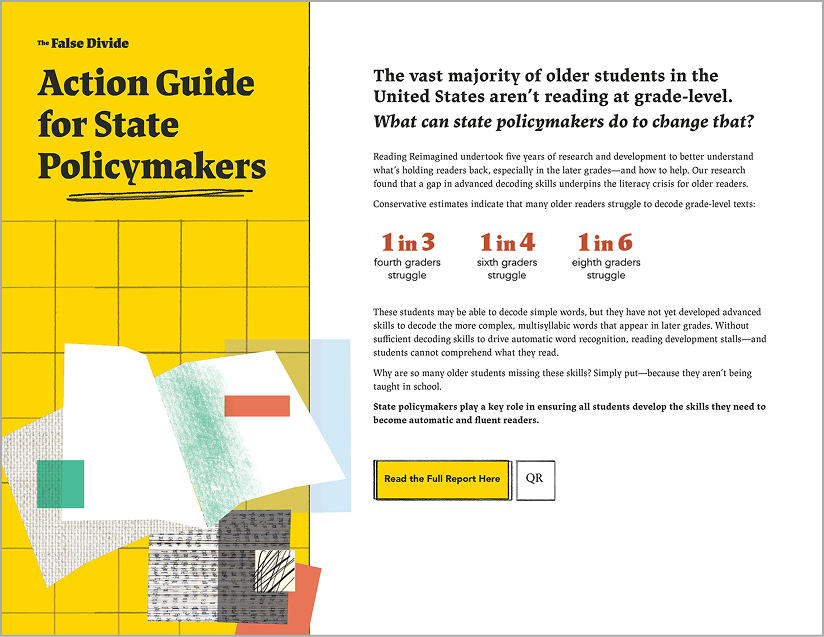
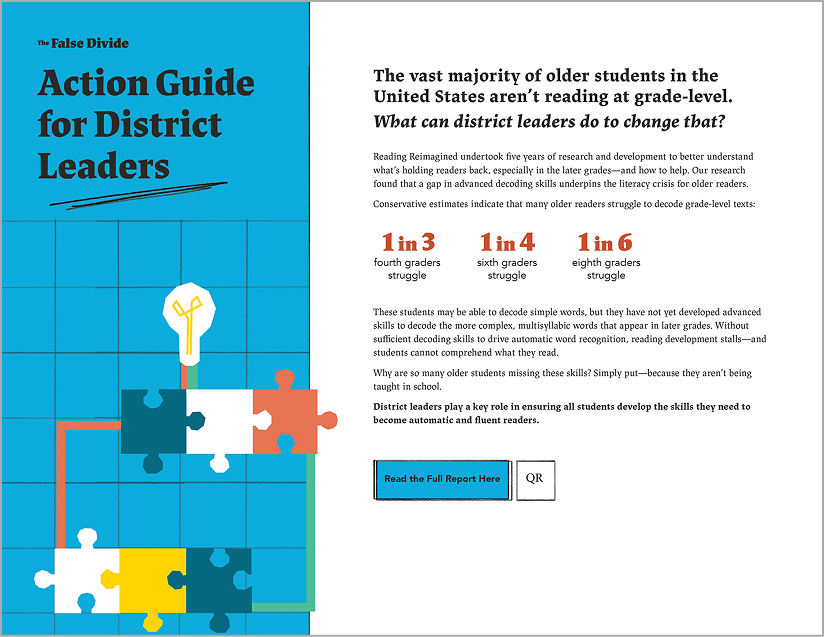
1 in 4 sixth graders struggle to decode grade-level texts.

It’s time to scrap “learn to read, then read to learn.”
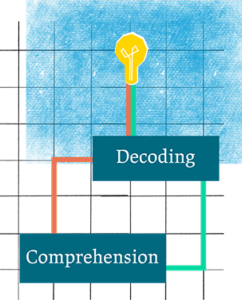
Literacy is not a switch that flips from decoding words in third grade to independently comprehending text in fourth. Decoding and comprehension are like two wires that must continue to develop and remain connected for the lights to go on and stay on. Learning to read requires explicit instruction in foundational literacy skills that advance in complexity from kindergarten through eighth grade.
Download the report